Enterprise engineering partnership with Backbase

Project overview

Backbase is a global leader in digital banking platforms, powering the customer experience of more than 150 financial institutions worldwide. As the platform rapidly evolved and the client base expanded, the company needed a technology partner capable of delivering engineering scalability, speed, and deep enterprise-level customization.

Digital Future Group became that partner — providing a long-term, high-performance collaboration built on quality, reliability, and engineering excellence.

The сhallenge

Backbase faced several mission-critical enterprise demands. They needed to scale engineering capacity, accelerate onboarding so new engineers could contribute within weeks, and optimize development and QA costs while maintaining rigorous technical standards. At the same time, they aimed to expand automated testing to reduce reliance on manual QA, all while managing complex global customizations across regions, banking cores, and diverse UX requirements.

Key challenges included:

  • Speedy scaling of engineering teams while ensuring quality and consistency.
  • Accelerated onboarding to bring new engineers up to speed quickly.
  • Cost optimization in development and QA without sacrificing technical rigor.
  • Expansion of automated testing to reduce manual QA dependency.
  • Managing global customization needs across multiple regions, banking cores, and UX variations.
Our approach

Digital Future Group developed a scalable engineering model that balanced flexibility with strict enterprise standards, enabling Backbase to grow efficiently while maintaining high quality and technical rigor.

We began by building a dedicated cross-functional engineering team, covering iOS, Android, backend development, QA, and SDET. The team combined senior and mid-level specialists to optimize both cost and performance, and was structured for long-term stability with strong retention of domain knowledge.

To address the enterprise need for speed, we accelerated onboarding, reducing the typical ramp-up time from 5 weeks to just 2. This was achieved through predefined adaptation workflows, efficient knowledge transfer, and careful alignment with Backbase’s architecture and development processes, allowing new engineers to contribute immediately.

Strengthening quality and automation was another critical focus. We developed and maintained advanced test automation frameworks, expanded automated test coverage, and reduced reliance on manual QA — significantly improving the confidence and reliability of releases.

Finally, we ensured enterprise-level customization and integration, delivering solutions that met complex global requirements.

Key areas included:

  • Deep UI customization aligned with third-party design systems.
  • Full multilingual support, including RTL.
  • Multi-factor authentication (SMS, email, authenticator apps).
  • Compatibility with multiple backend banking core versions.
  • Seamless integration with the Model Bank architecture.
  • Enhanced accessibility, including contrast adjustments, screen-reader support, and improved navigation.

This approach allowed Backbase to scale immediately, maintain high-quality engineering standards, and deliver a flexible, globally-ready platform for enterprise clients.

Results

The collaboration between Digital Future Group and Backbase delivered measurable and strategically significant outcomes. Reducing onboarding time to 2 weeks helped new engineers to contribute fast, accelerating delivery and increasing overall development velocity. Optimized staffing and automation practices led to approximately 15% reduction in engineering and QA costs, while expanded test automation strengthened release stability and confidence.

At the same time, Backbase achieved global readiness with enhanced localization, accessibility features, and RTL support, enabling a seamless experience across diverse markets. Flexible engagement models, including SSA, Managed Delivery, and SLaaS, provided predictable scaling, ensuring that engineering capacity could grow in step with business needs.

Key outcomes included:

Fast onboarding and accelerated delivery.

Cost optimization through balanced staffing and automation.

Higher reliability and stability of releases.

Global market readiness via localization, accessibility, and RTL support.

Scalable, predictable engineering capacity through flexible engagement models.

Why enterprise clients choose Digital Future Group

Digital Future Group delivers more than temporary team extensions — we provide a platform for sustainable, enterprise-grade engineering growth.

Our clients benefit from:

  • Quick access to top-tier specialists who can integrate seamlessly into complex projects.
  • Mature processes and disciplined engineering practices that ensure quality at scale.
  • Proven expertise in customizing complex enterprise platforms, including digital banking solutions.
  • Flexible engagement models aligned with long-term enterprise roadmaps.
  • The ability to support and evolve large, distributed, mission-critical ecosystems with reliability and precision.

Digital Future Group is a partner that scales with your products, maintaining enterprise-grade performance at every stage while enabling growth, innovation, and global readiness.

What is our actual core strength on this project:

  • Sometimes, staff reorganization creates an immediate capability gap. Critical expertise gets replaced or moves upwards, and the question became: who now carries the work forward?
  • Replacing that level of talent is not something you can do quickly. Even with strong hiring pipelines, companies must source candidates, run them through HR cycles, onboard them, then wait months for them to gain the product and system knowledge needed to be productive. Realistically, it takes around six months for a new hire to reach meaningful velocity.

This is exactly where we provide unique value.

We maintain engineering know-how that larger organizations cannot preserve consistently during periods of talent volatility. Despite Backbase having strong onboarding and documentation, we add a crucial layer of continuity by maintaining:

  • A core expert team dedicated to Backbase, continuously aligned with the company’s processes, technologies, and evolving architecture
  • A stable internal knowledge base of past decisions, technical context, and project history
  • A pool of engineers who can be rotated in quickly from adjacent projects

This allows us to plug capability gaps immediately, preserving momentum even as internal teams experience turnover or ramp up new hires.

Supporting Backbase beyond recovery, enabling expansion

Equally important is what happens when Backbase expands. Every time a new project kicks off, the first question is: “Where do we quickly find reliable engineers who can start strong and build initial momentum?”

This is another reason we are a trusted long-term partner.

Because our Backbase-aligned expert team is always active, informed, and available, we can drop in a ready-made nucleus of senior engineers who:

  • Kickstart a project immediately
  • Establish velocity and delivery processes
  • Build the foundation for success
  • Then hand the project over smoothly to internal teams once momentum is established

This approach ensures that no know-how is lost and that Backbase retains full ownership of the solution. Internal teams inherit a well-structured codebase, solid documentation, and a clear path forward, without the delays typically associated with ramping up new projects.

Speed, efficiency, and breadth of talent

Because we run a highly optimized HR pipeline, we can provide engineers immediately, eliminating the need for Backbase to wait for hiring cycles, budget approvals, or internal onboarding windows.

In many cases, starting with us is:

  • Far faster onboarding in about two weeks instead of six months
  • Operationally cleaner we provide plug-and-play resources
  • More cost-efficient for early-stage project acceleration
  • Less risky, because our teams already understand Backbase standards and expectations

And this support goes well beyond engineering. When needed, we have supplied:

  • Project Managers
  • Delivery Managers
  • Technical Leads and Architects
  • Organizational and process oversight for large teams

In short, we help Backbase not only close capability gaps but also launch, scale, and stabilize critical projects, ensuring continuous delivery even in times of internal change.

Non. story, point-by-point version

1. Backbase-dedicated expert core team

  • You maintain a persistent, Backbase-specific brain trust that understands their architecture, tools, decisions, and internal dynamics.
  • This is not generic FS/Banking expertise, it’s client-specific continuity that most cannot replicate at this depth.

2. Ultra-fast onboarding (≈2 weeks)

  • New engineers become productive in ~14 days, supported by your internal Backbase-aligned experts.
  • Giants normally achieve onboarding in months, not weeks.
  • This directly addresses Backbase’s biggest pain: recovering from rapid talent loss without waiting for internal hires.

3. Continuity after layoffs & attrition

  • Directly solving Backbase’s real situation: accidental over-reduction in staff, followed by voluntary exits and capability collapse.
  • We provide “continuity-as-a-service”, stabilizing projects and restoring delivery velocity.
  • The team that heals after downsizing is our niche for partner accounts.

4. Accelerated project kickstart & momentum building

We can instantly drop in senior engineers who:

  • Set up delivery processes
  • Establish momentum
  • Inject initial architecture and standards
  • Transition ownership back to internal teams

Larger partners typically frame their role as long-term execution, we go for rapid acceleration + handoff.

5. Strengthening (not replacing) internal teams

  • Our model is built around handing back stable, well-documented, high-velocity projects to Backbase’s internal staff.
  • This reduces dependency and builds long-term internal capability, something larger vendors rarely lead with.

6. Immediate multi-role support (beyond engineering)

  • You’ve supplied PMs, Delivery Managers, Architects, and team organizers all pre-aligned to Backbase technical context.
  • The breadth is similar to large vendors, but the focus and client-specific tuning makes it more effective and quicker to deploy.

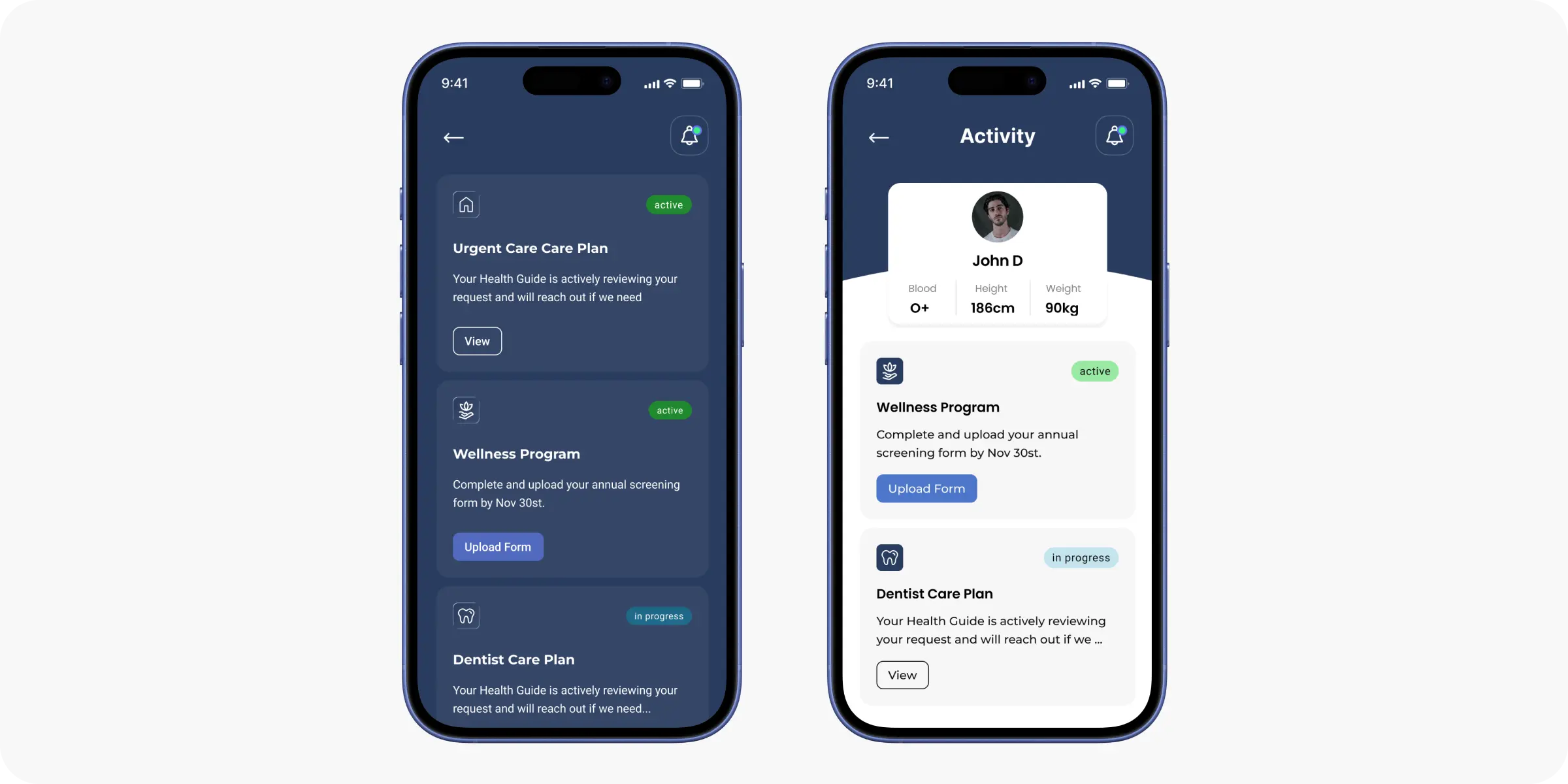
Healthcare insurance guidance & medical app solutions

Project overview

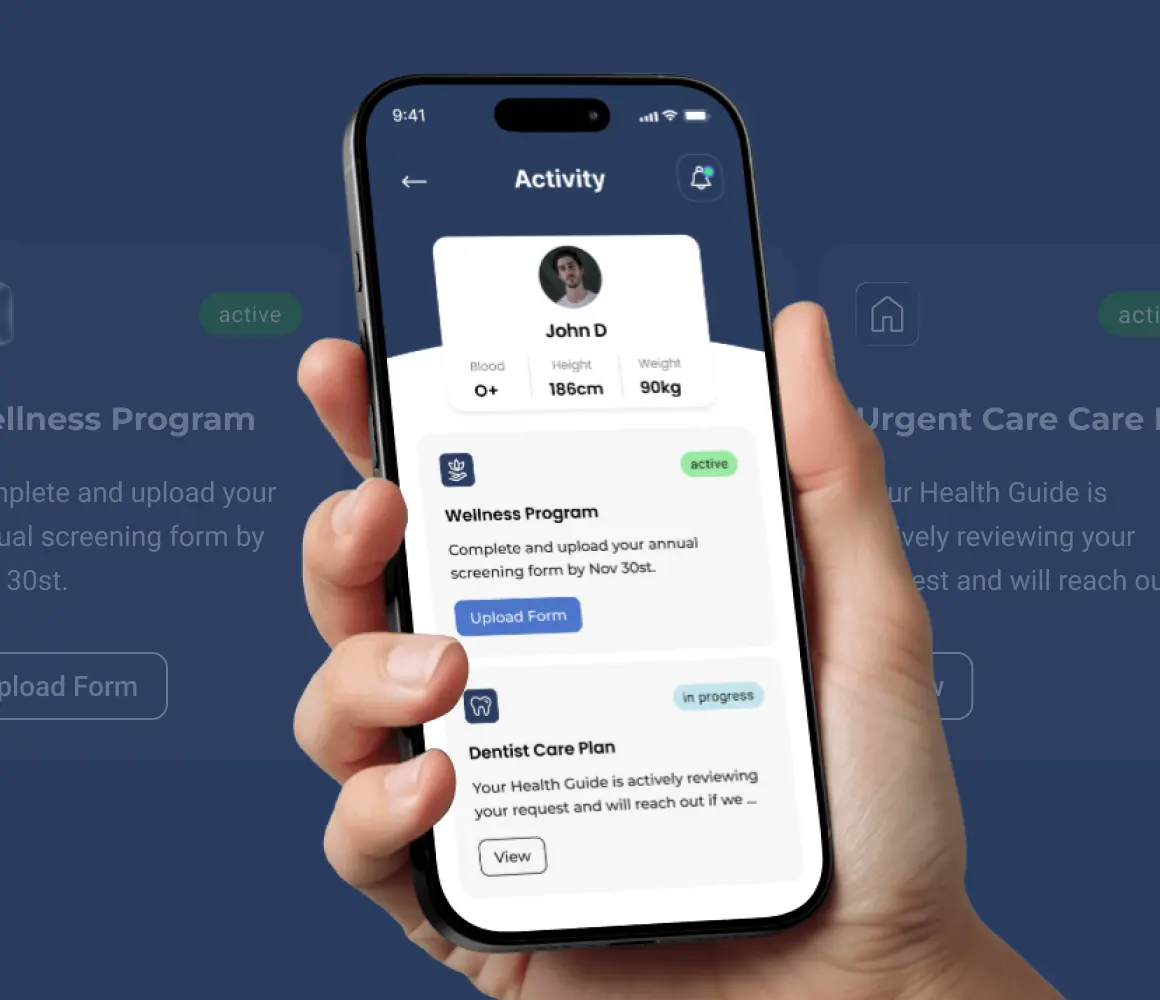
Healthcare is a brand dedicated to helping people navigate the often confusing world of health insurance. They approached us with the challenge of building a secure, intuitive, and scalable Web & Mobile platform that would allow users to choose the best insurance plans, connect with doctors, manage their medical data, and communicate safely with healthcare professionals, all while ensuring full HIPAA compliance.

We transformed this vision into a comprehensive digital solution that simplifies healthcare management and saves users time and money.

Healthcare is a technology-enabled healthcare services company that helps employers deliver simpler, more cost-effective healthcare and pharmacy benefits to their employees. Founded in 2017, it combines clinical professionals, such as nurses and pharmacists, with a modern digital platform to guide members through the healthcare system, including selecting providers, estimating costs, managing billing issues, and navigating coverage. Rightway also operates a transparent, pass-through pharmacy benefits manager (PBM) that avoids traditional rebate-driven incentives and instead focuses on prescribing high-value, clinically appropriate medications. Their model integrates care navigation and pharmacy management into one experience, aiming to improve outcomes, boost member satisfaction, and reduce employer healthcare spending. Recent growth, strong retention, and a 2025 rebrand reflect their ambition to position themselves as a leading, incentive-aligned alternative to traditional PBMs.

Challenges we solved

Building a reliable healthcare platform required addressing multiple critical challenges at once.

  • We needed to ensure the application was fully HIPAA-compliant and secure.
  • While also implementing seamless patient–doctor communication tools and robust encryption to protect sensitive personal medical data.
  • At the same time, the platform had to feature a unique, user-friendly design that stands out in a crowded market.
  • With role-based access for Family Groups, Medical Teams, and Care Teams, we ensure smooth, organized interactions among users.

Our solution

We built a powerful yet easy‑to‑use application that brings together all the essential healthcare management tools into a single, cohesive platform. At its core, our solution is designed to give patients, doctors, and care teams a seamless, secure, and efficient experience. Everything works together intuitively, but each function is tailored for its specific use case.

Our developed pharmacy-benefits engine works by stripping out the conflicts of interest that dominate traditional PBMs and replacing them with a transparent, clinically driven model that optimizes both cost and care. Instead of relying on opaque rebates, spread pricing, or ownership of mail-order and specialty pharmacies, Healthcare uses a flat per-member fee and passes through 100% of rebates and negotiated discounts, aligning its incentives with employers who want to reduce total drug spend.

Their formulary is built around clinical efficacy and value rather than manufacturer rebates, and members get direct guidance from licensed pharmacists who intervene at key moments, switching to generics or biosimilars, navigating prior authorizations, comparing dispensing options, and activating savings programs.

A digital interface layers on real-time cost transparency, claims analytics, and personalized medication navigation.

Cross-examining this with how the engine actually works, you can see that the optimization loop relies on three reinforcing components:

  • Economic alignment that removes profit-from-spend incentives;
  • Clinical intelligence + human pharmacists who steer members toward better and cheaper options;
  • Data and workflow integration that surfaces savings opportunities (biosimilar switches, adherence gaps, cost-effective dispensing routes) at scale. This architecture enables Rightway to consistently lower PMPM pharmacy costs while improving member satisfaction, demonstrating how a PBM can function effectively when its financial model, clinical guidance, and data systems are structurally aligned with employer and patient outcomes rather than legacy industry incentives.

We structured the app to bring all essential healthcare features into one seamless platform:

  • Health board (main screen): The central hub for searching specialists, reviewing health data, and communicating with doctors.
  • Admin panel (via API): Manages patient profiles, medical professional data, and groups users with similar conditions, keeping front-end and back-end fully synced.
  • Real-time chat: Secure messaging between patients and doctors, including system notifications, health alerts, and patient surveys.
  • Intelligent doctor search: Advanced filters, geolocation, and maps help users quickly find the right specialist nearby.
  • Role-based user groups: Family Groups, Medical Teams, and Care Teams ensure organized, secure access and communication.
  • Unified document storage: Prescriptions, medical records, and other documents are stored in a single encrypted repository for easy, secure access.

This setup makes managing healthcare simple, efficient, and fully integrated.

Impact & results

The app quickly established itself as a stable, scalable, and HIPAA-compliant healthcare platform, actively used across multiple medical institutions. By combining secure data management, real-time communication, and intuitive search functionality, it delivered measurable benefits for both patients and healthcare providers.

Key achievements include:

These results demonstrate not only the platform’s technical success but also its real-world impact: it improves communication, streamlines healthcare management, and empowers patients to take control of their health.

Client Testimonial

The team has impressive engineering expertise and has gone above and beyond in learning regulatory industry frameworks such as HIPAA. I would highly recommend them to anyone considering their services.

To sum up

Delivering a secure, user-friendly, and scalable healthcare solution helped the brand to transform patient engagement, optimize healthcare workflows, and expand rapidly in the market, creating lasting value for users, medical professionals, and institutions alike.

Healthcare is not a value-based care organization in the formal payer–provider sense, but It is one of the best examples of value-based care principles applied to pharmacy benefits, employer benefits, and care navigation.

In the ecosystem of employer health benefits and PBMs, an area notoriously misaligned with value. Healthcare’s model is unusually value-oriented and incentive-aligned. In that specific domain, they are a shining example.

Logistics process optimization with ERP & MES

The challenge

A global leader in industrial IoT monitoring faced a critical obstacle: while its hardware was world-class, the user experience of its remote monitoring platform lagged.

Operators found it challenging to navigate the “Devices” section, interpret sensor data, and act quickly. This lack of clarity created friction, confusion, and inefficiency — leading to:

  • Rising support tickets and onboarding delays
  • Missed upsell opportunities during self-service interactions
  • Decreased confidence among new users

The client didn’t need a simple UI facelift. They needed a strategic UX transformation — one that would reflect the maturity of their technology and directly contribute to business growth.

Our solution

We led a complete experience redesign grounded in real-world usage and business objectives.

Discovery & insight

Through user interviews, behavioral analytics, and on-platform observation, our team identified friction points and mapped them to measurable KPIs — clarity, efficiency, and scalability.

Design & execution

We developed a modular, data-centric interface that made complex industrial monitoring intuitive and actionable:

  • Reimagined “Devices” Dashboard — a simplified view of connected assets and live sensor data.
  • Smart Filtering & Real-Time Status Indicators — to surface what matters most.
  • Predictive Visualizations — intuitive charts forecasting fuel levels, anomalies, and performance deviations.
  • Mobile-First Adaptability — responsive layouts for operators on the go.

The new UX combined clarity with depth, embodying the client’s values of precision, reliability, and intelligence.

The results

The redesigned platform quickly proved its impact — both in user experience and bottom-line growth:

2× increase in sensor sales through self-service interactions

Significant drop in support tickets related to device navigation.

Higher user satisfaction and faster onboarding for new customers.

Improved operational efficiency across sales and support teams.

The platform shifted from a usability challenge to a core growth engine — driving engagement, retention, and revenue.

Why DFG

We design clarity that drives performance. Our approach bridges human insight and business intelligence, aligning user experience with measurable business outcomes. For this client, it meant transforming a complex industrial platform into a product that sells itself.

Beyond this case: applying it across industrial IoT

The same principles apply across the broader industrial and manufacturing ecosystem:

  • Predictive monitoring systems can adopt the same UX clarity to improve operator responsiveness.
  • Energy management platforms can use similar dashboards to simplify decision-making.
  • Smart logistics and asset-tracking solutions can leverage real-time visualizations to improve uptime and transparency.

When UX and business strategy converge, DFG turns complexity into a competitive advantage.

Redesigning a SaaS platform to drive adoption & scale

The challenge

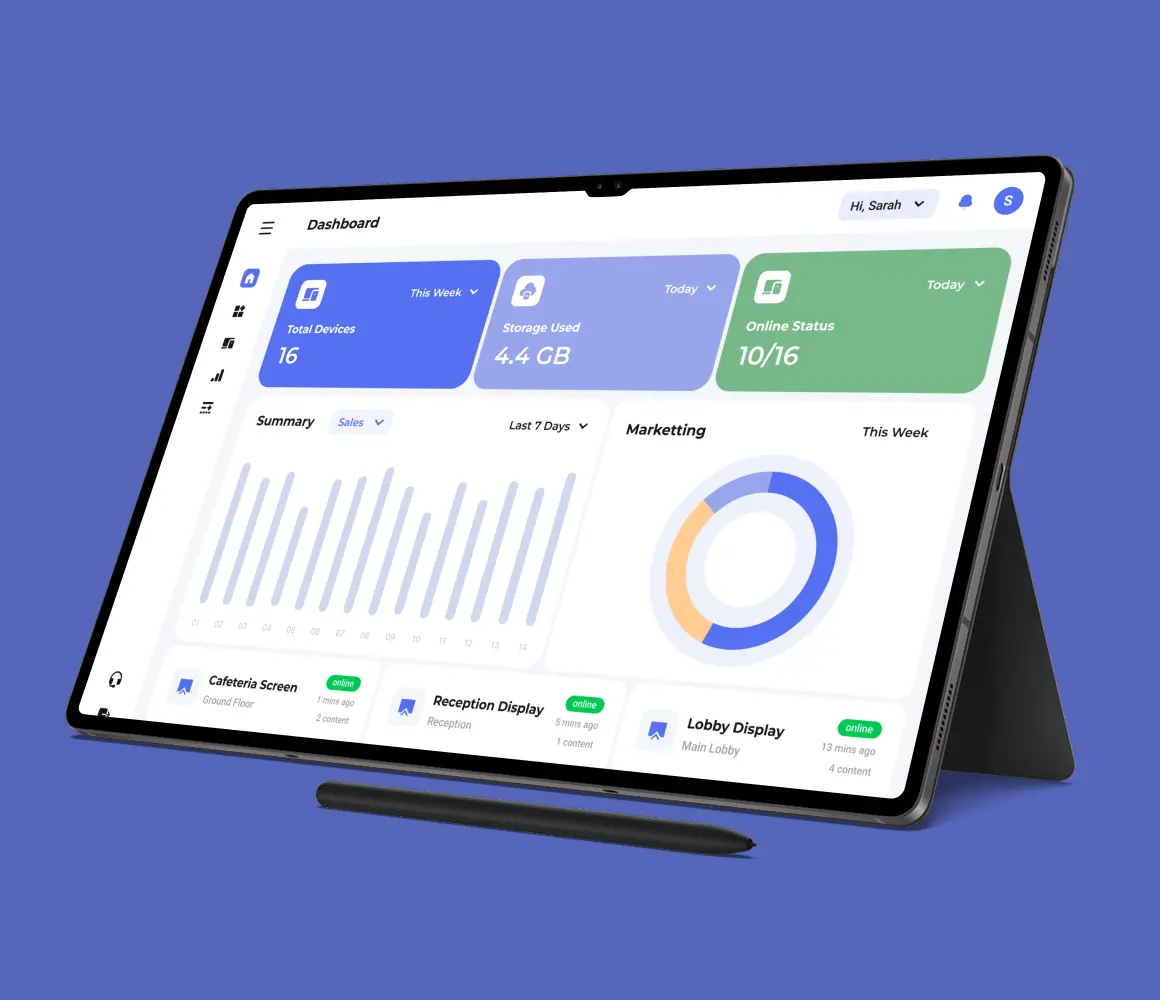
Our client had built a powerful cloud-based CMS for managing digital signage across locations and screen types. Technically, it worked flawlessly — but for users, the experience wasn’t intuitive.

Non-technical customers struggled to connect screens, schedule content, and preview layouts. Advanced modules like analytics and intelligent scheduling existed but were buried under layers of complexity.

The result?

  • Slow adoption rates
  • Repetitive support requests
  • Low engagement with premium features
  • A growing perception that the platform was “too technical”

The client required a UX strategy that revealed the product’s true power and made growth effortless.

Our solution

Digital Future Group stepped in to reimagine the user experience from the ground up — focusing on clarity, confidence, and scalability.

Discovery

Through deep-dive interviews, analytics, and workflow observation, we discovered that users weren’t failing because the system was broken — they were failing because it didn’t guide them.

Tasks like “connect screen → assign layout → schedule content” required too many steps, too little feedback, and no explicit confirmation of what was live.

Experience overhaul

We rebuilt the client’s product experience around the way real users think and work:

  • Intuitive Dashboard — Centralized view of screens with live status, sync health, and visual cues for quick decisions.
  • Drag-and-Drop Content Scheduler — Calendar-based planning with instant previews and real-time feedback.
  • Integrated Premium Modules — A contextual marketplace with guided activation flows and clear value messaging.
  • Progressive Onboarding — Smart tooltips, checklists, and embedded guidance to reduce learning time.
  • Modular Design System — Scalable foundation for future white-label solutions and feature expansion.

The results

After launch, the data spoke clearly — UX became the engine of client’s growth:

2–3x faster user activation, with new users publishing content within minutes.

Sharp decline in support tickets, especially for setup and publishing workflows.

Higher adoption of premium modules, thanks to more precise positioning and frictionless upsells.

Stronger product perception — from “functional” to enterprise-grade and market-ready.

The platform evolved from a technical CMS into a confident, scalable command center for managing digital screens.

Why DFG

At DFG, design is a strategy.

We turn complex digital products into experiences that drive growth and scale without adding friction. Our focus is on aligning user success with business outcomes, ensuring every interaction contributes to adoption, retention, and revenue.

With this client, we made the product work harder, sell faster, and scale smarter.

Beyond this case: applying it across SaaS & MediaTech

The same UX clarity and modular design thinking can empower other industries:

  • Media management platforms — streamline publishing workflows and content scheduling.
  • IoT dashboards — enhance control and visibility across connected devices.
  • Enterprise SaaS products — use feedback-driven design to reduce churn and boost self-service.

Where technology meets user hesitation, DFG delivers confidence — by design.

IoT-enabled vertical farming platform

The challenge

A global industrial company with a well-established sustainable vertical farming business needed a digital backbone to scale operations. Their farms required precise control of the microclimate — including temperature, humidity, lighting, and irrigation — and seamless integration of thousands of IoT devices. Existing tools couldn’t ensure the level of scalability, real-time insight, and automation required for international growth.

Our solution

We built a comprehensive IoT and AI-driven platform, combining cloud infrastructure, advanced sensors, and user-centric design:

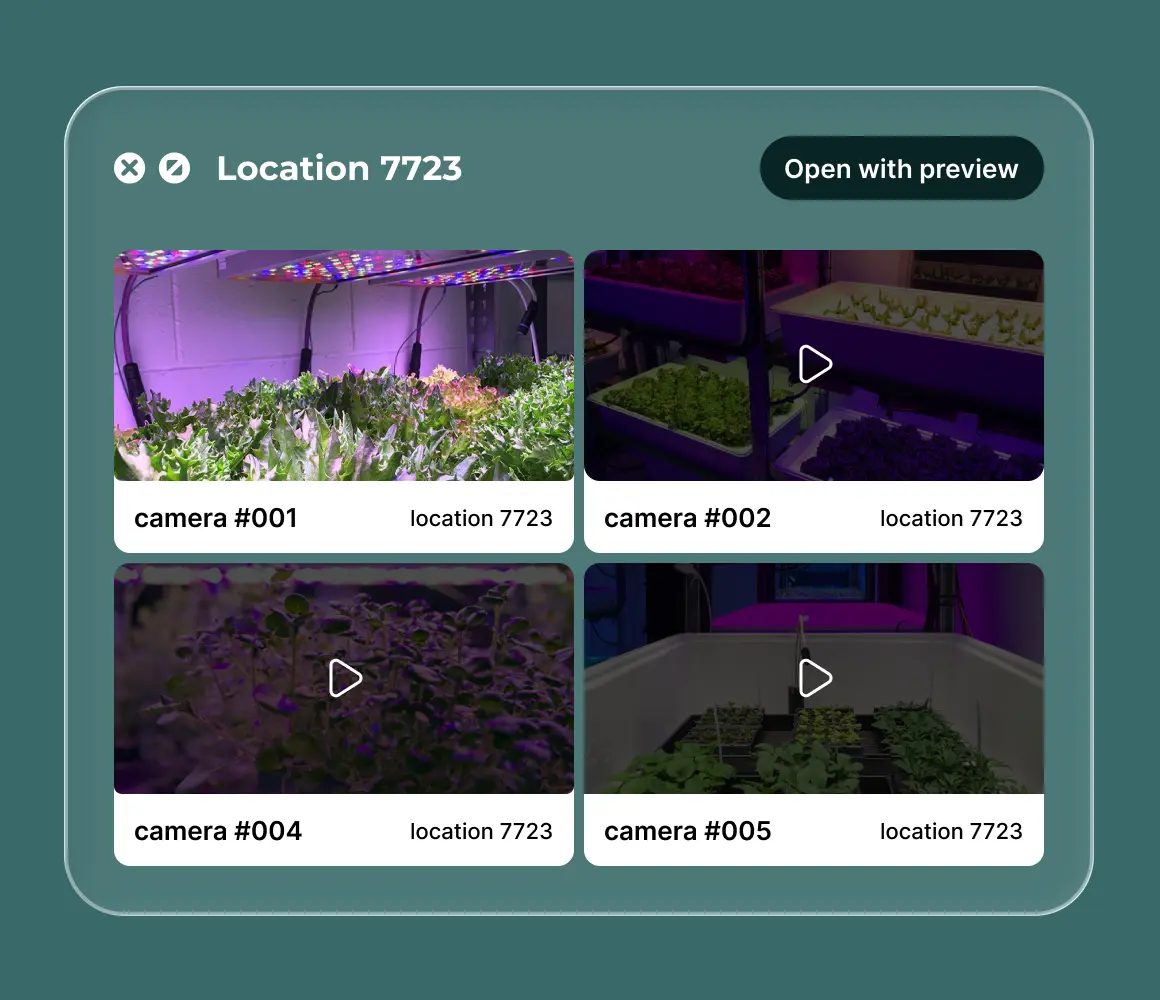
  • Sensor integration — connected hygrometers, air and soil thermometers, chemical soil sensors, weather stations, and hydraulic flow monitors.
  • Multi-channel data transmission — IoT devices streamed data via LoRa, ZigBee, WiFi, Thread, and Bluetooth to local nodes and the cloud.
  • AWS serverless architecture — ensured real-time processing, analytics, and scalability for global farm networks.
  • AI-powered insights — computer vision from drones and satellites detected anomalies in crop growth, improving decision-making.
  • Unified dashboard — a web-based and mobile-friendly platform allowed operators to monitor conditions, receive alerts, and adjust critical parameters instantly.

The results

Energy Efficiency via adaptive, spectrum-optimized lighting systems.

Scalable Growth with a flexible architecture that supports the rapid deployment of new farms worldwide.

Resilient Sustainability through reduced resource consumption and higher reliability in food production.

Why DFG

What made this project a success was the vision-driven approach. At DFG, we bridge IoT, AI, and enterprise-scale systems into solutions that automate processes and redefine what’s possible. We design platforms not only to work today, but to scale and evolve with tomorrow’s demands.

For this client, we went beyond digitalization of the greenhouses. We built the foundation for a global sustainable food system — one that proves technology can serve both profit and planet.

Beyond vertical farming: applying it across AgriTech

The same digital framework can transform any AgriTech business:

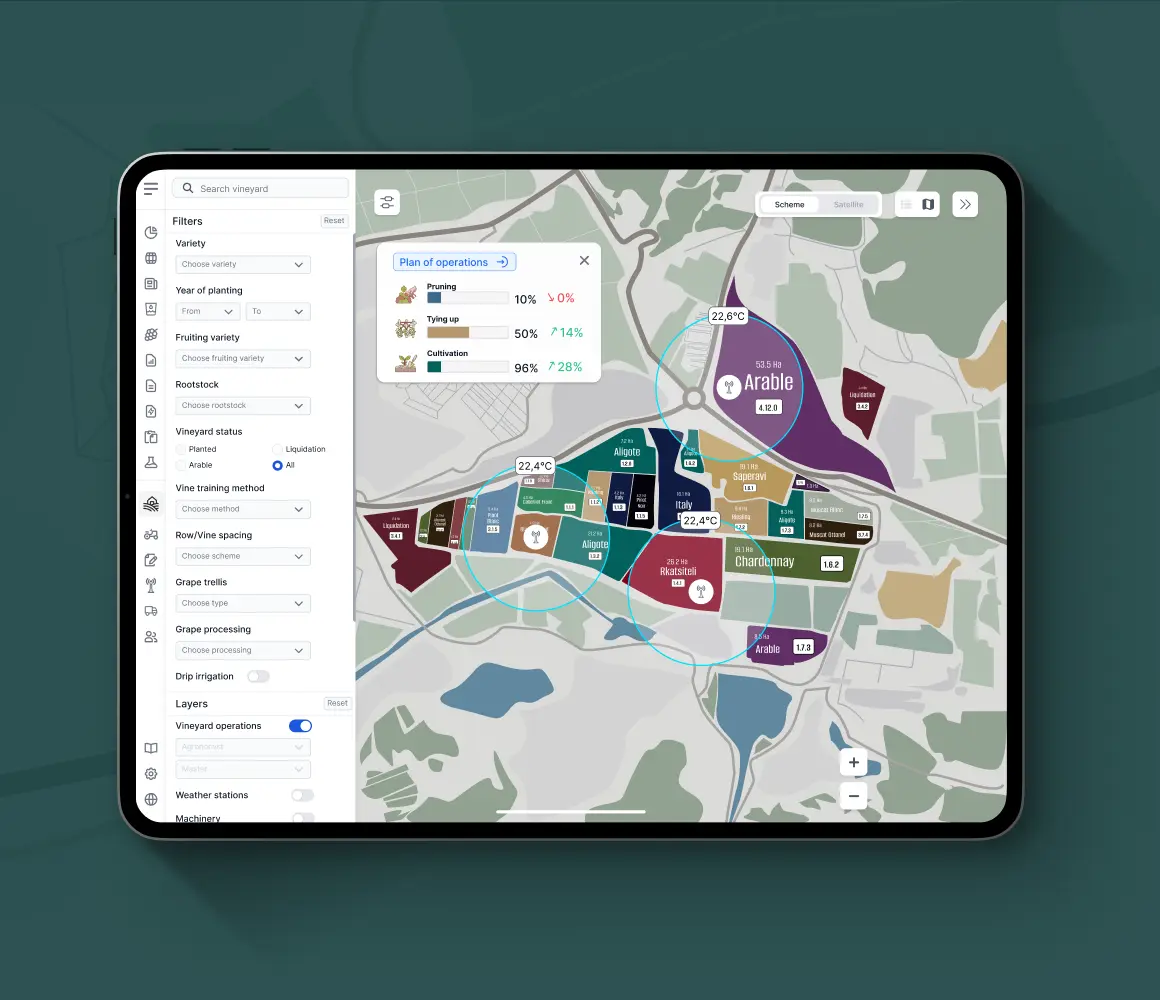
  • Vineyards & wineries — monitor soil moisture, predict disease risks, and optimize irrigation across hectares of vines.
  • Greenhouse operations — automate climate control, nutrient dosing, and energy management for consistent crop quality.
  • Open-field farming — combine IoT data with satellite imagery to optimize yield forecasts and reduce input waste.
  • Agri-logistics & storage — track freshness, humidity, and temperature of produce in transit to minimize losses.

Wherever nature meets scale, DFG delivers the digital intelligence layer that enables sustainable growth.

End-to-end platform for smart winemaking

The challenge

Traditional winemaking thrives on craftsmanship, but scaling it without losing precision is a complex endeavor. Many wineries struggle with transparency in their processes, inconsistent wine quality, and high production costs. Managing fermentation, lab analysis, and bottling through spreadsheets or paper logs makes it nearly impossible to react fast or maintain consistency across batches.

Our solution

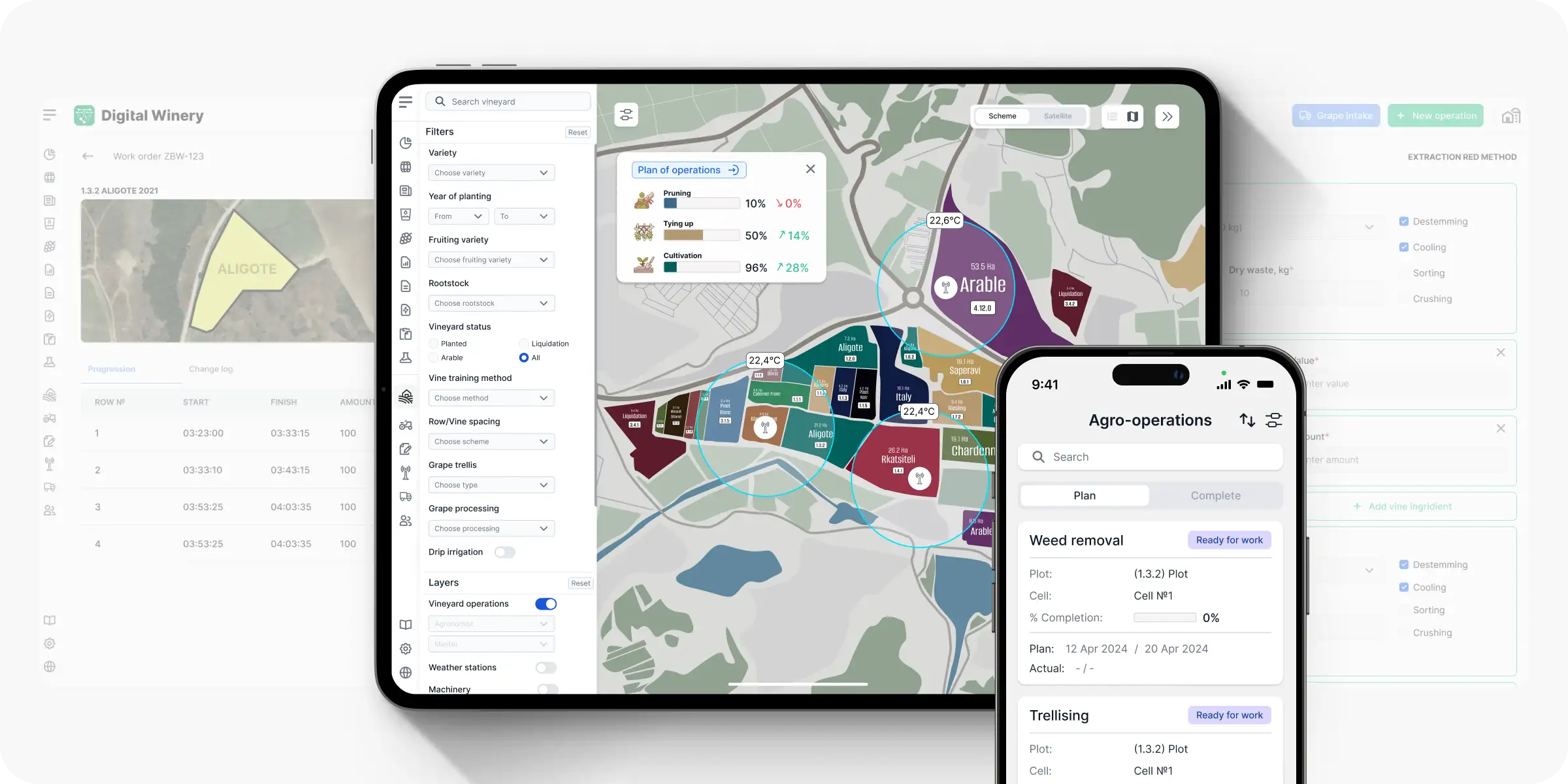
We created Digital Winery — an integrated platform that connects IoT sensors, AI algorithms, and production management tools into one intelligent ecosystem for winemakers.

  • End-to-end control — from grape harvest to bottling, every process is tracked and recorded.
  • Smart tank management — real-time data on temperature, fill levels, cleaning status, and capacity utilization.
  • AI-assisted decision making — predictive insights on fermentation behavior, blending options, and quality consistency.
  • Work order system — automated task management for cellar teams, ensuring accountability and operational flow.
  • Laboratory module — digital work orders for analyses, real-time results tracking, and historical data visualization.
  • Inventory & cost management — data-driven planning of additives, chemicals, and resources to reduce costs.
  • Analytics & forecasting — historical performance, quality metrics, and predictive yield modeling for business decisions.

The results

Improved consistency of wine batches through data-driven control.

Enhanced transparency — every tank, test, and action visible in real time.

Accelerated onboarding for new staff with clear digital workflows.

Actionable analytics empowering winemakers to balance quality and efficiency.

Why DFG

At Digital Future Group, we merge centuries-old craftsmanship with cutting-edge technology. Digital Winery was born from the collaboration between software engineers and professional winemakers — transforming tradition into a smart, traceable, and scalable production system.

Our approach blends AI, IoT, and user-centered design to elevate industries where precision and creativity coexist — from vineyards to vertical farms.

Beyond wine: scaling the model across AgriTech

The same digital framework can empower:

  • Dairy production — real-time quality control and batch analytics.
  • Breweries — automated fermentation monitoring and predictive maintenance.
  • Olive oil & distilleries — end-to-end traceability and consistency assurance.
  • Food processing plants — IoT-enabled operations with sustainability metrics.

Where tradition meets technology, DFG delivers the intelligence layer that turns data into craft.

From legacy modernization to AI-driven enterprise integration

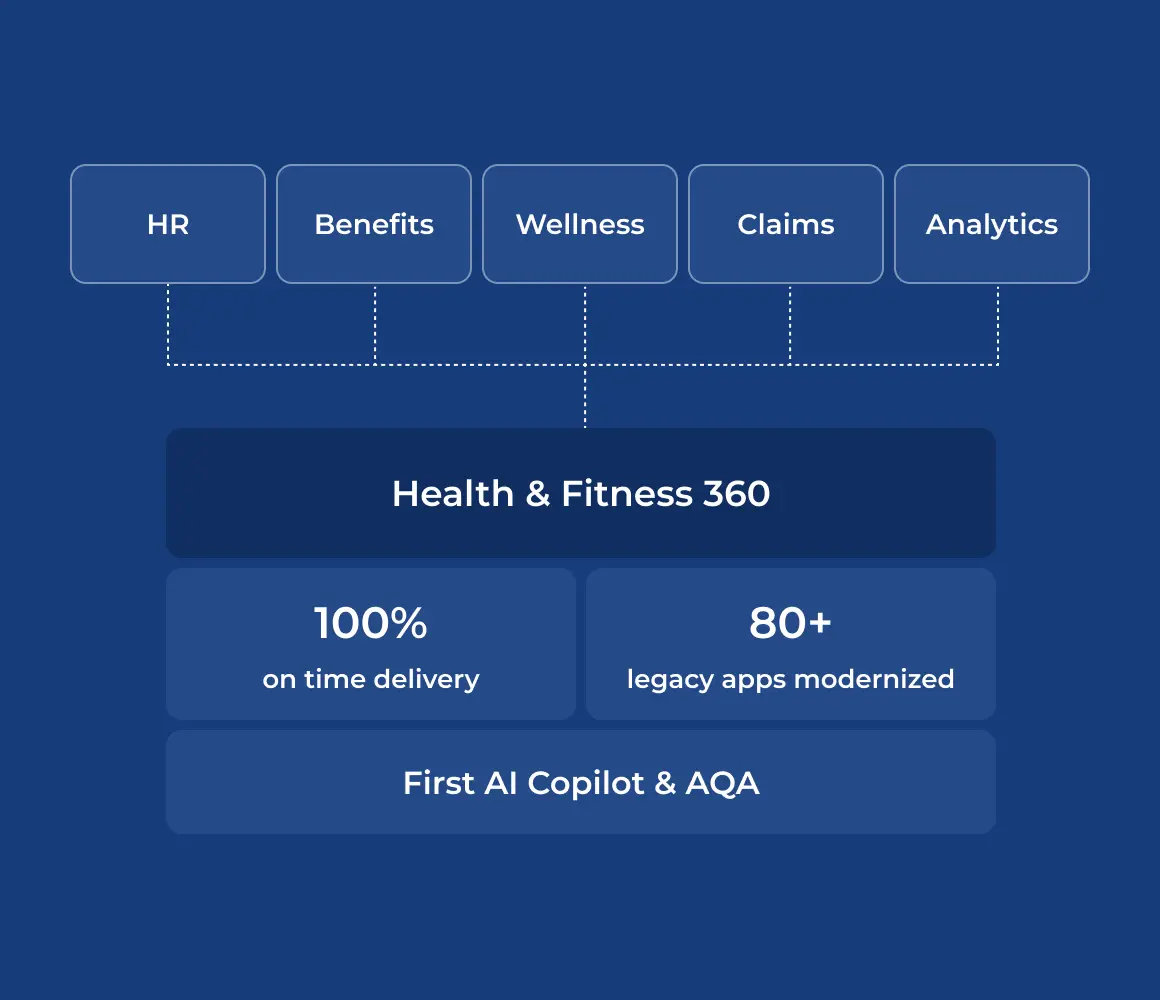
Legacy Modernization & AI Integration Success — this case study shows how Dfuture partnered with Trustmark to modernize legacy systems and implement AI-driven solutions across the enterprise. How a four-year collaboration evolved from a single app integration into a company-wide modernization partnership, unifying systems, introducing AI co-pilots, and setting the foundation for enterprise-wide cohesion.

Key outcomes

First AI co-pilot and AI-driven QA frameworks established at Trustmark

A unified UI/UX architecture is planned for the HealthFitness 360 ecosystem

Advanced to Tier 2 partner with Tier 1 engagement under possible discussion for 2026

Background & business context

For over a century, Trustmark has helped businesses fulfill their promises to employees through comprehensive benefits, wellness, and financial protection programs. Recognized with an A (Excellent) rating for Insurer Financial Strength by A.M. Best (April 2025), the company is known for striking a balance between care, innovation, and long-term stability.

Our collaboration began when Trustmark acquired our FitReserve fitness platform as part of its HealthFitness initiative. The goal is to connect wellness and benefits data to enhance workforce engagement and productivity. What started as a single system integration evolved into a strategic partnership spanning modernization, AI enablement, and enterprise-wide UX unification.

From FitReserve to long-term partnership

The first engagement focused on integrating FitReserve into Trustmark’s internal systems — the challenge was in diverse coding languages used within FitReserve and other HealthFitness apps. Through disciplined engineering and transparent delivery, we ensured interoperability, stability, and scalability without disrupting operations.

The success of this integration enabled us to gain operational control of the HealthFitness 360 ecosystem, where we continued to enhance performance and security. When Trustmark sold the FitReserve asset to eGym (Germany), our mature documentation and reliability enabled a seamless handoff — proof that disciplined modernization creates business value beyond code.

That outcome solidified a new level of trust. Over time, we became not just vendors, but partners responsible for critical modernization initiatives across Trustmark’s engineering landscape.

Legacy modernization and vulnerability upgrades

Our next mission was to tackle Trustmark’s legacy systems—a portfolio of aging IBM and Struts-based applications vulnerable to security and performance risks.

Starting small, we successfully completed a vulnerability upgrade ahead of schedule. That pilot opened the door to a complete modernization program — one we won against IBM itself and a 20,000-person Latin American engineering firm.

We won through clarity, not scale. Our proposal offered fixed pricing, predictable milestones, and feasibility grounded in data. Over several quarters, we migrated and modernized two batches of over 40 apps each.

Teams across Trustmark reported faster performance, simplified governance, and renewed confidence in their modernization roadmap.

This success naturally evolved into a deeper partnership focused on accelerating engineering and enabling AI.

AI co-pilot implementation and knowledge transfer

By the beginning of 2025, Trustmark’s leadership sought to integrate AI copilots into its development workflows — but without transparent governance, adoption risked inconsistency and data exposure.

Drawing on our three years of internal R&D in AI-assisted code generation, we partnered with Trustmark to design and deploy their first co-pilot environment, establishing guardrails and measurable impact indicators.

We implemented:

  • AI governance and acceptable-use frameworks
  • Repository-level integration with version control and CI/CD tools
  • Metrics for measuring code quality and delivery speed

Delivered pro bono, this initiative introduced a scalable, responsible model for AI adoption. Within months, developers reported tangible improvements in velocity and review efficiency. More importantly, AI became an enhancer of engineering excellence — not a threat to it.

Unified front-end architecture

When Trustmark began replacing in-house wellness platforms with third-party tools, a new challenge appeared: fragmentation. Different systems meant inconsistent experiences for employees and administrators alike.

Trustmark asked if we could rebuild unity without dismantling what worked. We proposed a unified front-end architecture — a flexible “experience layer” that restored cohesion across HR, health, and benefits platforms.

This design restored visibility and usability, creating a single intuitive interface without disrupting backend systems. The success of this project prompted Trustmark to extend the same architectural concept across the entire organization, transforming a tactical UX problem into a strategic unification initiative that continues to evolve today.

Automated quality assurance (AQA)

As Trustmark’s understanding of automation and AI capabilities grew, AQA became a cornerstone requirement for every technical project. We were among the first to coherently integrate automation and AI-driven AQA frameworks into project planning and execution. By dynamically generating and maintaining test cases through AI, the system achieved 80-90% automation coverage, drastically reducing manual testing hours and regression cycles.

Integrated into Trustmark’s CI/CD pipelines, AQA provided real-time feedback, faster releases, and greater reliability. For Trustmark’s engineering teams, testing became a catalyst for continuous improvement, turning a bottleneck into a strength.

Future outlook

Our ongoing collaboration with Trustmark focuses on:

  • Completing the corporate-wide unified UI/UX framework
  • Expanding AQA automation across engineering pipelines
  • Developing AI-driven observability tools for proactive incident prevention

The shared vision remains clear: to make modernization seamless, secure, and human-centered — where innovation amplifies wellbeing across every digital touchpoint.

CategoryOutcome
Delivery Performance100% on-time delivery across 4 years
Legacy Modernization80+ IBM/Struts applications migrated or upgraded
AI EnablementFirst AI co-pilot and QA frameworks implemented
UX ConsolidationUnified interface for HR, health, and benefits systems
Vendor TrustAdvanced to Tier 2, Tier 1 pending for 2026

Reflective insight

Our experience with Trustmark reaffirmed a core belief: enterprise transformation isn’t about chasing innovation — it’s about earning trust through predictable, disciplined progress.

Technology changes fast; relationships built on reliability endure.