
Healthcare insurance guidance & medical app solutions

Project overview

Healthcare is a brand dedicated to helping people navigate the often confusing world of health insurance. They approached us with the challenge of building a secure, intuitive, and scalable Web & Mobile platform that would allow users to choose the best insurance plans, connect with doctors, manage their medical data, and communicate safely with healthcare professionals, all while ensuring full HIPAA compliance.

We transformed this vision into a comprehensive digital solution that simplifies healthcare management and saves users time and money.

Healthcare is a technology-enabled healthcare services company that helps employers deliver simpler, more cost-effective healthcare and pharmacy benefits to their employees. Founded in 2017, it combines clinical professionals, such as nurses and pharmacists, with a modern digital platform to guide members through the healthcare system, including selecting providers, estimating costs, managing billing issues, and navigating coverage. Rightway also operates a transparent, pass-through pharmacy benefits manager (PBM) that avoids traditional rebate-driven incentives and instead focuses on prescribing high-value, clinically appropriate medications. Their model integrates care navigation and pharmacy management into one experience, aiming to improve outcomes, boost member satisfaction, and reduce employer healthcare spending. Recent growth, strong retention, and a 2025 rebrand reflect their ambition to position themselves as a leading, incentive-aligned alternative to traditional PBMs.

Challenges we solved

Building a reliable healthcare platform required addressing multiple critical challenges at once.

  • We needed to ensure the application was fully HIPAA-compliant and secure.
  • While also implementing seamless patient–doctor communication tools and robust encryption to protect sensitive personal medical data.
  • At the same time, the platform had to feature a unique, user-friendly design that stands out in a crowded market.
  • With role-based access for Family Groups, Medical Teams, and Care Teams, we ensure smooth, organized interactions among users.
Our solution

We built a powerful yet easy‑to‑use application that brings together all the essential healthcare management tools into a single, cohesive platform. At its core, our solution is designed to give patients, doctors, and care teams a seamless, secure, and efficient experience. Everything works together intuitively, but each function is tailored for its specific use case.

Our developed pharmacy-benefits engine works by stripping out the conflicts of interest that dominate traditional PBMs and replacing them with a transparent, clinically driven model that optimizes both cost and care. Instead of relying on opaque rebates, spread pricing, or ownership of mail-order and specialty pharmacies, Healthcare uses a flat per-member fee and passes through 100% of rebates and negotiated discounts, aligning its incentives with employers who want to reduce total drug spend.

Their formulary is built around clinical efficacy and value rather than manufacturer rebates, and members get direct guidance from licensed pharmacists who intervene at key moments, switching to generics or biosimilars, navigating prior authorizations, comparing dispensing options, and activating savings programs.

A digital interface layers on real-time cost transparency, claims analytics, and personalized medication navigation.

Cross-examining this with how the engine actually works, you can see that the optimization loop relies on three reinforcing components:

  • Economic alignment that removes profit-from-spend incentives;
  • Clinical intelligence + human pharmacists who steer members toward better and cheaper options;
  • Data and workflow integration that surfaces savings opportunities (biosimilar switches, adherence gaps, cost-effective dispensing routes) at scale. This architecture enables Rightway to consistently lower PMPM pharmacy costs while improving member satisfaction, demonstrating how a PBM can function effectively when its financial model, clinical guidance, and data systems are structurally aligned with employer and patient outcomes rather than legacy industry incentives.

We structured the app to bring all essential healthcare features into one seamless platform:

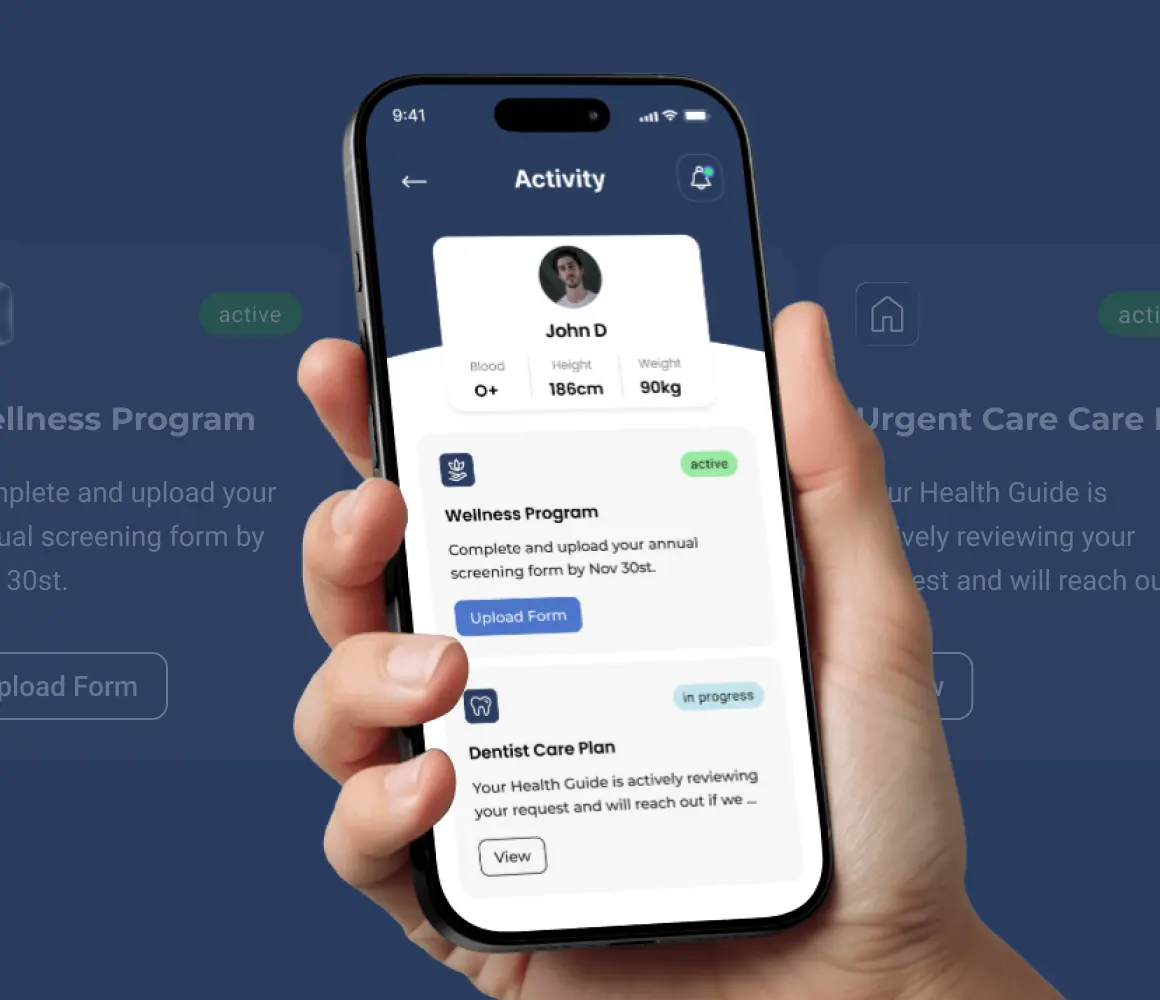
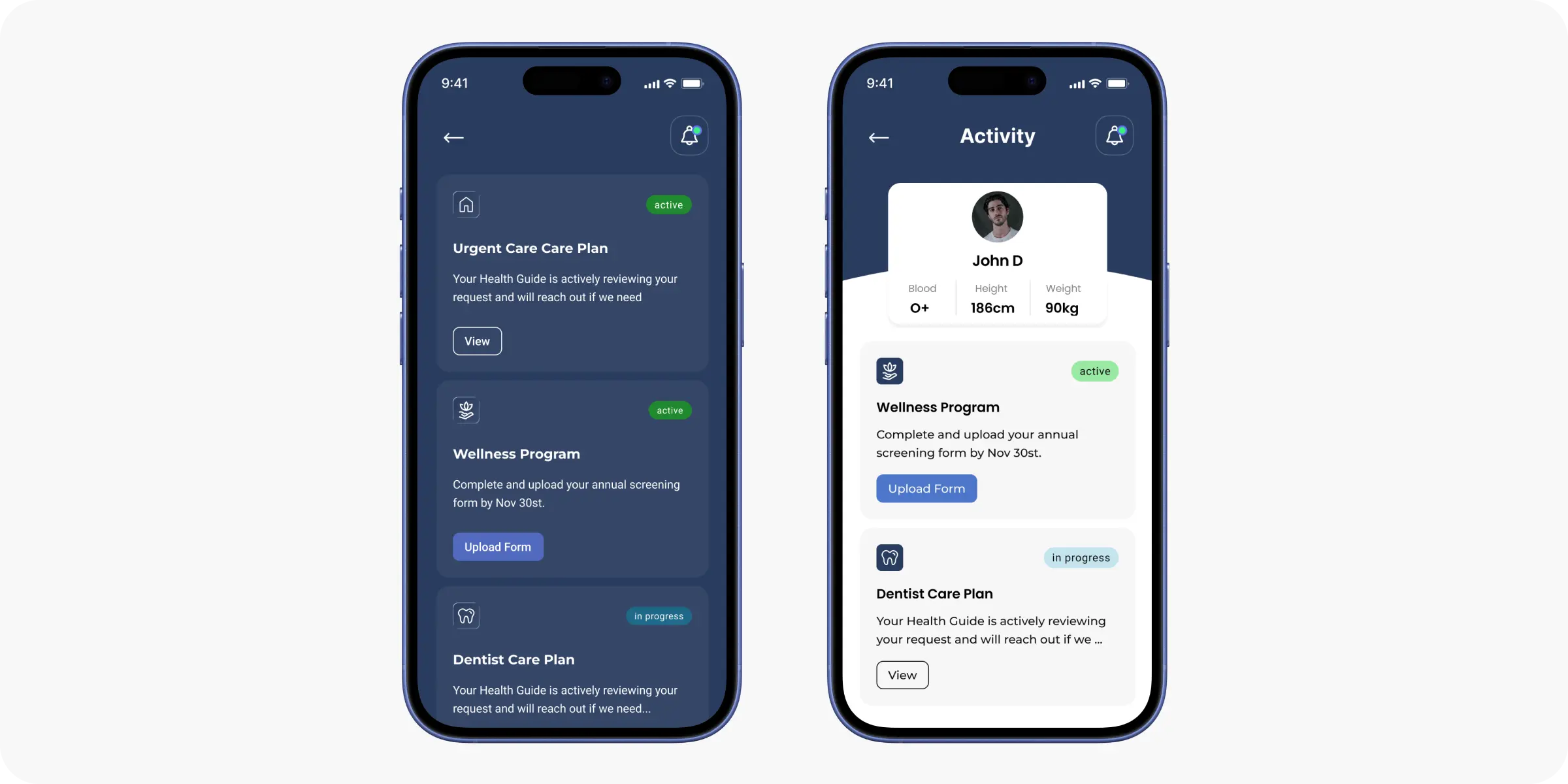
  • Health board (main screen): The central hub for searching specialists, reviewing health data, and communicating with doctors.
  • Admin panel (via API): Manages patient profiles, medical professional data, and groups users with similar conditions, keeping front-end and back-end fully synced.
  • Real-time chat: Secure messaging between patients and doctors, including system notifications, health alerts, and patient surveys.
  • Intelligent doctor search: Advanced filters, geolocation, and maps help users quickly find the right specialist nearby.
  • Role-based user groups: Family Groups, Medical Teams, and Care Teams ensure organized, secure access and communication.
  • Unified document storage: Prescriptions, medical records, and other documents are stored in a single encrypted repository for easy, secure access.

This setup makes managing healthcare simple, efficient, and fully integrated.

Impact & results

The app quickly established itself as a stable, scalable, and HIPAA-compliant healthcare platform, actively used across multiple medical institutions. By combining secure data management, real-time communication, and intuitive search functionality, it delivered measurable benefits for both patients and healthcare providers.

Key achievements include:

These results demonstrate not only the platform’s technical success but also its real-world impact: it improves communication, streamlines healthcare management, and empowers patients to take control of their health.

Client Testimonial

The team has impressive engineering expertise and has gone above and beyond in learning regulatory industry frameworks such as HIPAA. I would highly recommend them to anyone considering their services.

To sum up

Delivering a secure, user-friendly, and scalable healthcare solution helped the brand to transform patient engagement, optimize healthcare workflows, and expand rapidly in the market, creating lasting value for users, medical professionals, and institutions alike.

Healthcare is not a value-based care organization in the formal payer–provider sense, but It is one of the best examples of value-based care principles applied to pharmacy benefits, employer benefits, and care navigation.

In the ecosystem of employer health benefits and PBMs, an area notoriously misaligned with value. Healthcare’s model is unusually value-oriented and incentive-aligned. In that specific domain, they are a shining example.

Logistics process optimization with ERP & MES

The challenge

A global leader in industrial IoT monitoring faced a critical obstacle: while its hardware was world-class, the user experience of its remote monitoring platform lagged.

Operators found it challenging to navigate the “Devices” section, interpret sensor data, and act quickly. This lack of clarity created friction, confusion, and inefficiency — leading to:

  • Rising support tickets and onboarding delays
  • Missed upsell opportunities during self-service interactions
  • Decreased confidence among new users

The client didn’t need a simple UI facelift. They needed a strategic UX transformation — one that would reflect the maturity of their technology and directly contribute to business growth.

Our solution

We led a complete experience redesign grounded in real-world usage and business objectives.

Discovery & insight

Through user interviews, behavioral analytics, and on-platform observation, our team identified friction points and mapped them to measurable KPIs — clarity, efficiency, and scalability.

Design & execution

We developed a modular, data-centric interface that made complex industrial monitoring intuitive and actionable:

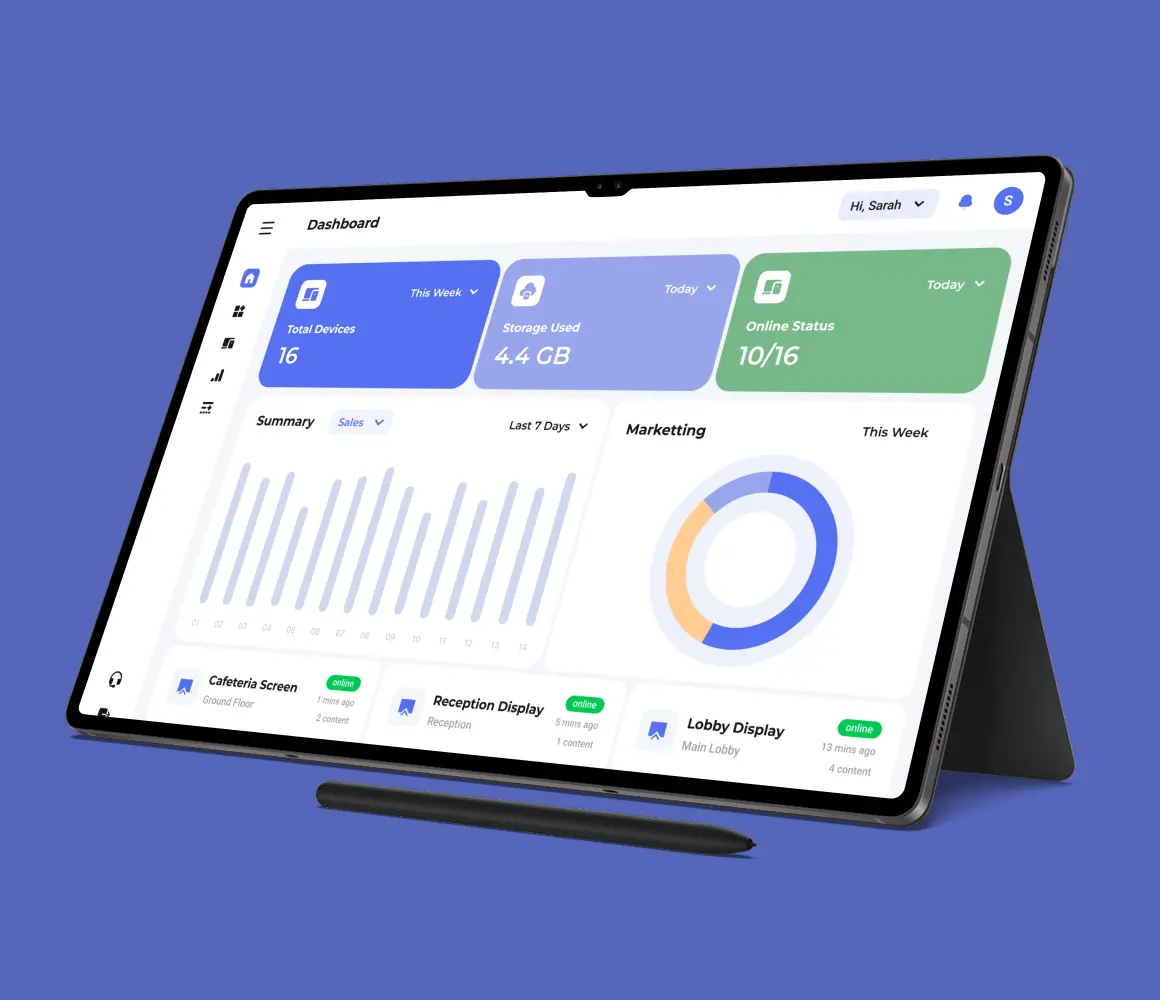
  • Reimagined “Devices” Dashboard — a simplified view of connected assets and live sensor data.
  • Smart Filtering & Real-Time Status Indicators — to surface what matters most.
  • Predictive Visualizations — intuitive charts forecasting fuel levels, anomalies, and performance deviations.
  • Mobile-First Adaptability — responsive layouts for operators on the go.

The new UX combined clarity with depth, embodying the client’s values of precision, reliability, and intelligence.

The results

The redesigned platform quickly proved its impact — both in user experience and bottom-line growth:

2× increase in sensor sales through self-service interactions

Significant drop in support tickets related to device navigation.

Higher user satisfaction and faster onboarding for new customers.

Improved operational efficiency across sales and support teams.

The platform shifted from a usability challenge to a core growth engine — driving engagement, retention, and revenue.

Why DFG

We design clarity that drives performance. Our approach bridges human insight and business intelligence, aligning user experience with measurable business outcomes. For this client, it meant transforming a complex industrial platform into a product that sells itself.

Beyond this case: applying it across industrial IoT

The same principles apply across the broader industrial and manufacturing ecosystem:

  • Predictive monitoring systems can adopt the same UX clarity to improve operator responsiveness.
  • Energy management platforms can use similar dashboards to simplify decision-making.
  • Smart logistics and asset-tracking solutions can leverage real-time visualizations to improve uptime and transparency.

When UX and business strategy converge, DFG turns complexity into a competitive advantage.

Redesigning a SaaS platform to drive adoption & scale

The challenge

Our client had built a powerful cloud-based CMS for managing digital signage across locations and screen types. Technically, it worked flawlessly — but for users, the experience wasn’t intuitive.

Non-technical customers struggled to connect screens, schedule content, and preview layouts. Advanced modules like analytics and intelligent scheduling existed but were buried under layers of complexity.

The result?

  • Slow adoption rates
  • Repetitive support requests
  • Low engagement with premium features
  • A growing perception that the platform was “too technical”

The client required a UX strategy that revealed the product’s true power and made growth effortless.

Our solution

Digital Future Group stepped in to reimagine the user experience from the ground up — focusing on clarity, confidence, and scalability.

Discovery

Through deep-dive interviews, analytics, and workflow observation, we discovered that users weren’t failing because the system was broken — they were failing because it didn’t guide them.

Tasks like “connect screen → assign layout → schedule content” required too many steps, too little feedback, and no explicit confirmation of what was live.

Experience overhaul

We rebuilt the client’s product experience around the way real users think and work:

  • Intuitive Dashboard — Centralized view of screens with live status, sync health, and visual cues for quick decisions.
  • Drag-and-Drop Content Scheduler — Calendar-based planning with instant previews and real-time feedback.
  • Integrated Premium Modules — A contextual marketplace with guided activation flows and clear value messaging.
  • Progressive Onboarding — Smart tooltips, checklists, and embedded guidance to reduce learning time.
  • Modular Design System — Scalable foundation for future white-label solutions and feature expansion.

The results

After launch, the data spoke clearly — UX became the engine of client’s growth:

2–3x faster user activation, with new users publishing content within minutes.

Sharp decline in support tickets, especially for setup and publishing workflows.

Higher adoption of premium modules, thanks to more precise positioning and frictionless upsells.

Stronger product perception — from “functional” to enterprise-grade and market-ready.

The platform evolved from a technical CMS into a confident, scalable command center for managing digital screens.

Why DFG

At DFG, design is a strategy.

We turn complex digital products into experiences that drive growth and scale without adding friction. Our focus is on aligning user success with business outcomes, ensuring every interaction contributes to adoption, retention, and revenue.

With this client, we made the product work harder, sell faster, and scale smarter.

Beyond this case: applying it across SaaS & MediaTech

The same UX clarity and modular design thinking can empower other industries:

  • Media management platforms — streamline publishing workflows and content scheduling.
  • IoT dashboards — enhance control and visibility across connected devices.
  • Enterprise SaaS products — use feedback-driven design to reduce churn and boost self-service.

Where technology meets user hesitation, DFG delivers confidence — by design.

IoT-enabled vertical farming platform

The challenge

A global industrial company with a well-established sustainable vertical farming business needed a digital backbone to scale operations. Their farms required precise control of the microclimate — including temperature, humidity, lighting, and irrigation — and seamless integration of thousands of IoT devices. Existing tools couldn’t ensure the level of scalability, real-time insight, and automation required for international growth.

Our solution

We built a comprehensive IoT and AI-driven platform, combining cloud infrastructure, advanced sensors, and user-centric design:

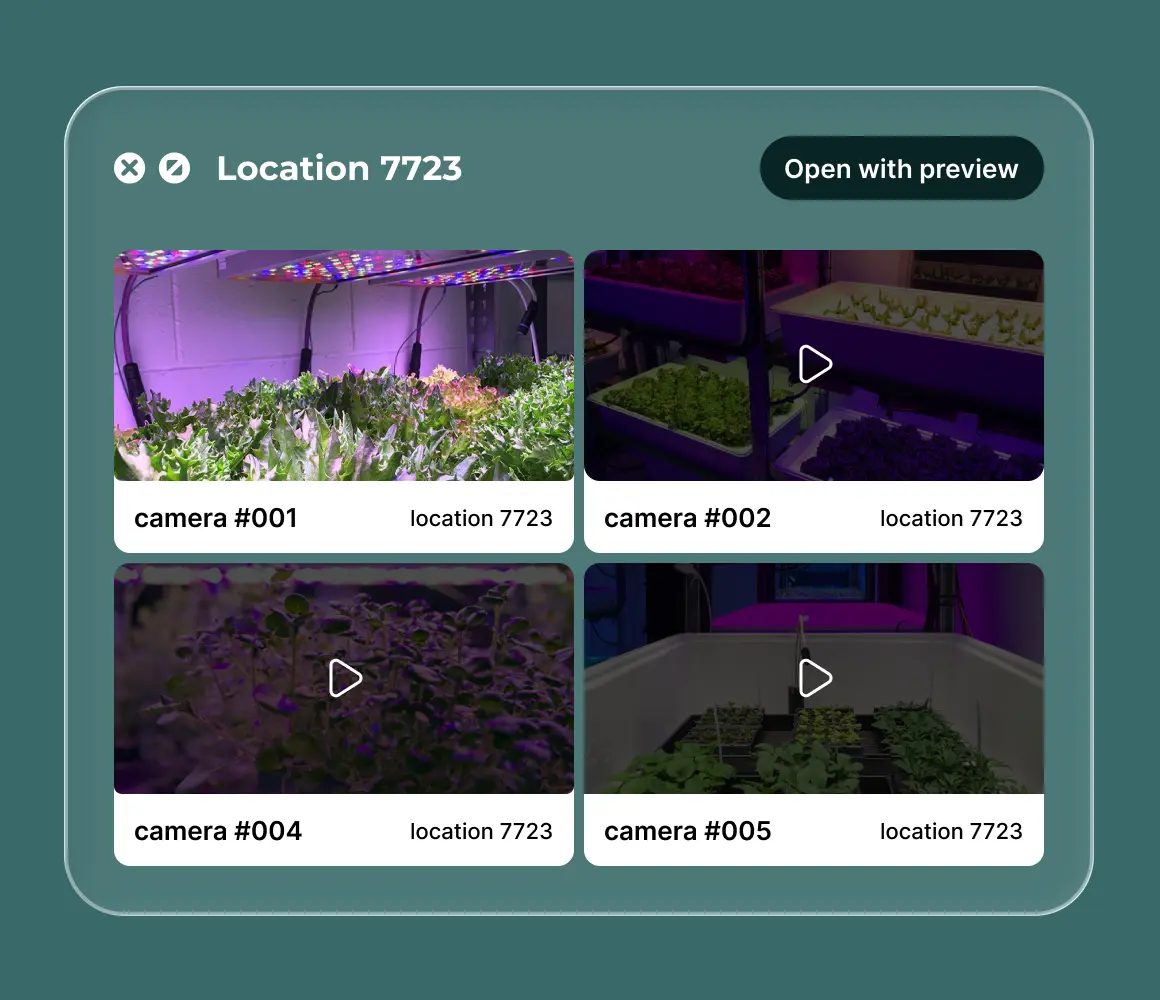
  • Sensor integration — connected hygrometers, air and soil thermometers, chemical soil sensors, weather stations, and hydraulic flow monitors.
  • Multi-channel data transmission — IoT devices streamed data via LoRa, ZigBee, WiFi, Thread, and Bluetooth to local nodes and the cloud.
  • AWS serverless architecture — ensured real-time processing, analytics, and scalability for global farm networks.
  • AI-powered insights — computer vision from drones and satellites detected anomalies in crop growth, improving decision-making.
  • Unified dashboard — a web-based and mobile-friendly platform allowed operators to monitor conditions, receive alerts, and adjust critical parameters instantly.

The results

Energy Efficiency via adaptive, spectrum-optimized lighting systems.

Scalable Growth with a flexible architecture that supports the rapid deployment of new farms worldwide.

Resilient Sustainability through reduced resource consumption and higher reliability in food production.

Why DFG

What made this project a success was the vision-driven approach. At DFG, we bridge IoT, AI, and enterprise-scale systems into solutions that automate processes and redefine what’s possible. We design platforms not only to work today, but to scale and evolve with tomorrow’s demands.

For this client, we went beyond digitalization of the greenhouses. We built the foundation for a global sustainable food system — one that proves technology can serve both profit and planet.

Beyond vertical farming: applying it across AgriTech

The same digital framework can transform any AgriTech business:

  • Vineyards & wineries — monitor soil moisture, predict disease risks, and optimize irrigation across hectares of vines.
  • Greenhouse operations — automate climate control, nutrient dosing, and energy management for consistent crop quality.
  • Open-field farming — combine IoT data with satellite imagery to optimize yield forecasts and reduce input waste.
  • Agri-logistics & storage — track freshness, humidity, and temperature of produce in transit to minimize losses.

Wherever nature meets scale, DFG delivers the digital intelligence layer that enables sustainable growth.