In this article
PCI DSS 12.3.4 asks the organization to review its hardware and software technologies; the owner of one application prepares the evidence record for its component in that technology review. In v4.0.1, the review runs at least once every 12 months and covers at least four elements. The technologies continue to receive "security fixes from vendors promptly". They continue to support the organization's PCI DSS "compliance" and do not preclude it. Industry and vendor announcements, such as plans for "end of life", are documented. A plan to remediate outdated technologies is documented and "approved by senior management". Until 2025-03-31 the requirement was a best practice; it is now fully considered in an assessment. In v3.2.1 the same number covered a different item: a method to identify the owner, contact information and purpose of devices.
Confirm that the requirement applies
Applicability follows card data; industry alone does not establish it. The requirements cover the cardholder data environment, where card data is stored, processed or transmitted, and components that could affect its security, including applications and software components.
| Category | What places a component there | Who assigns and who checks |
|---|---|---|
| In the cardholder data environment | Stores, processes or transmits card data | Organization confirms; assessor checks |
| Connected to it or able to affect its security | Could impact the security of card data | Organization confirms; assessor checks |
| Outside it | Neither handles card data nor could affect it | Organization confirms; assessor checks |
Name the authorized scope and standards reviewers
The organization confirms its PCI DSS scope at least once every 12 months and after significant changes; the assessor checks it at each assessment. The party that accepts the organization's validation, typically a payment brand or an acquirer, sets how it validates and reports. Name the people accountable for PCI DSS and for the boundaries of the cardholder data environment: the responsible reviewers. Their scope decision opens the evidence record.
Identify the exact application technology
Name the component, its exact version, where it runs and which business process depends on it. Requirement 6.3.2 asks for an inventory of custom software and its built-in third-party components. The full dependency tree of the running build also shows libraries pulled in transitively, which a list of direct dependencies leaves out.
Separate lifecycle and actual fix coverage
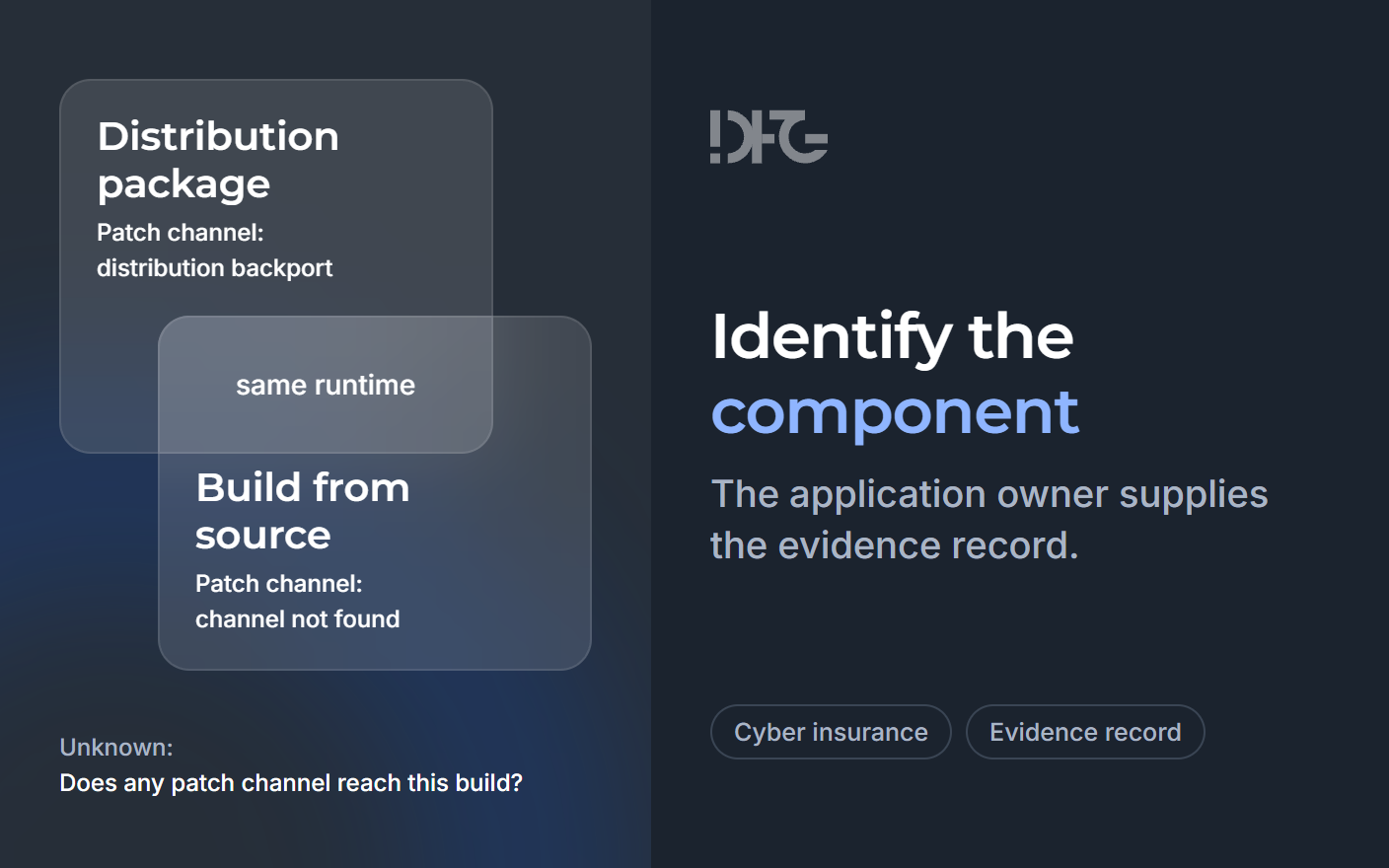
Lifecycle and fixes belong to different elements. Element 3 asks what the author announced; element 1 asks whether security fixes still reach your build. That depends on the patch source: where the build gets its security fixes, such as distribution updates, a vendor's paid support or the project. The standard defines promptly as quickly as is reasonably possible. Red Hat explains that it may apply a fix to an older version of a package it distributes. The version number alone then will not show whether the package is vulnerable or not. That holds for distribution packages; for a library inside the application, the project's statement decides. Requirement 6.3.3 is separate: in v4.0.1, the organization installs fixes for critical vulnerabilities within one month of release.
Record the two as separate lines, each with its evidence and status.
Assemble traceable vendor evidence
Evidence for element 1 and element 3 comes from the author's page with your reading date, bulletins naming your exact build, and a record of where that build came from. Keep apart what the standard says, what the author states, and how you recorded and checked it.
While the author ships fixes for your version, its bulletins and the installed build carry element 1. After an end of life announcement, element 1 rests on any other patch source. Extended support is a vendor offer whose terms you check for your exact version. Where it covers that version, it can be the patch source for element 1; buying it is a legitimate choice.
Record unknowns and available application options
The evidence record is the entry for one component in the technology review, and each piece of evidence has a status. Checked means verified on the system or in the build. Vendor statement means the author's statement, with link and reading date. Not checked yet keeps an open question visible.
Three options follow, in order, as decisions about the application. Support: a sufficient patch source changes the vendor evidence. Environment: a new operating system, server or image changes where the component runs. Code: updating, replacing or removing a dependency changes the dependency tree. We compare support and the environment before a bounded code change; any of the three can be justified.
Who carries out the option is a separate decision: the application team, the current contractor or DFG.
Use a synthetic evidence record
Illustrative. A fictional Java application that the responsible reviewers placed in scope; no names, counts or results.
| Field | Illustrative entry |
|---|---|
| Standard | PCI DSS 12.3.4 |
| Version | v4.0.1 |
| Scope owner | Responsible reviewers: placed the application in scope; decision and date recorded |
| Component | Apache Log4j 1.x, exact version from the build, inside the application, writing its log (checked) |
| Vendor evidence | For element 1 and element 3: end of life announced on 2015-08-05; the project states that "none of the issues listed will be fixed" and recommends Log4j 2 (vendor statement) |
| Unknown | Listed modules used by the logging configuration (not checked yet). Library origin: the project or another supplier (not checked yet). Open source project as a vendor for element 1, per the responsible reviewers (not checked yet). The element 2 conclusion, by the responsible reviewers (not checked yet) |
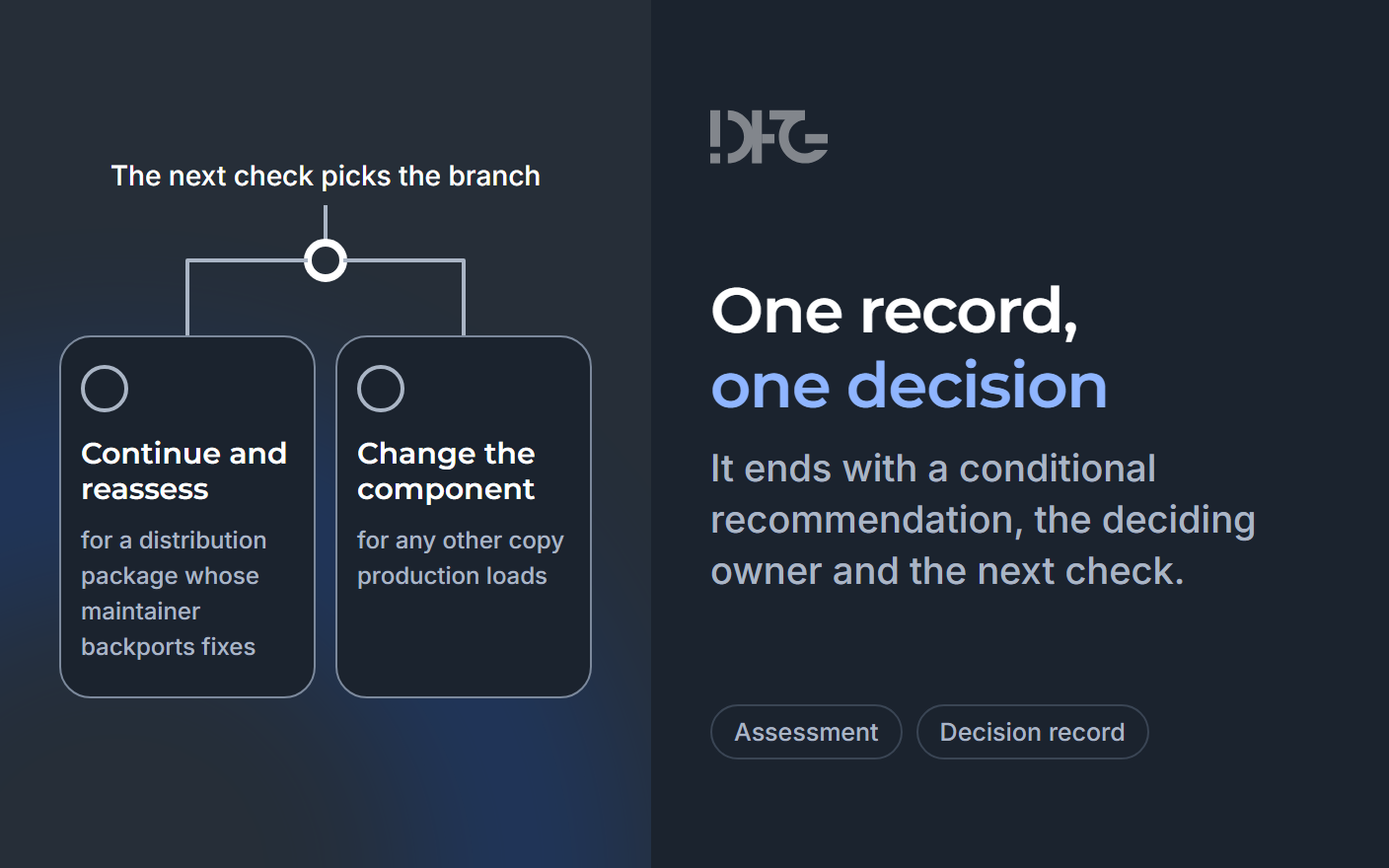
| Decision | Support: no patch source from the project; another supplier's build not checked yet. Environment: a new operating system or server leaves the library unchanged. Plan proposal: replace this one dependency with Log4j 2 or remove unused modules, without a rewrite |
| Owner | Application owner: modules and build origin. Responsible reviewers: vendor question, element 2. Senior management: plan approval |
| Review record | Entry in the organization's technology review; plan approval pending with senior management; next review within 12 months |
The example ends with a proposal for the plan that still awaits approval by senior management.
Review any required plan against the primary text
Element 4 asks for a documented plan to remediate outdated technologies, including those with an announced end of life, and senior management approves it. The customized approach objective states the intent: technologies stay up to date and supported by the vendor, and plans for unsupported components are reviewed periodically. The assessor checks the technology review by examining its documentation and interviewing staff.
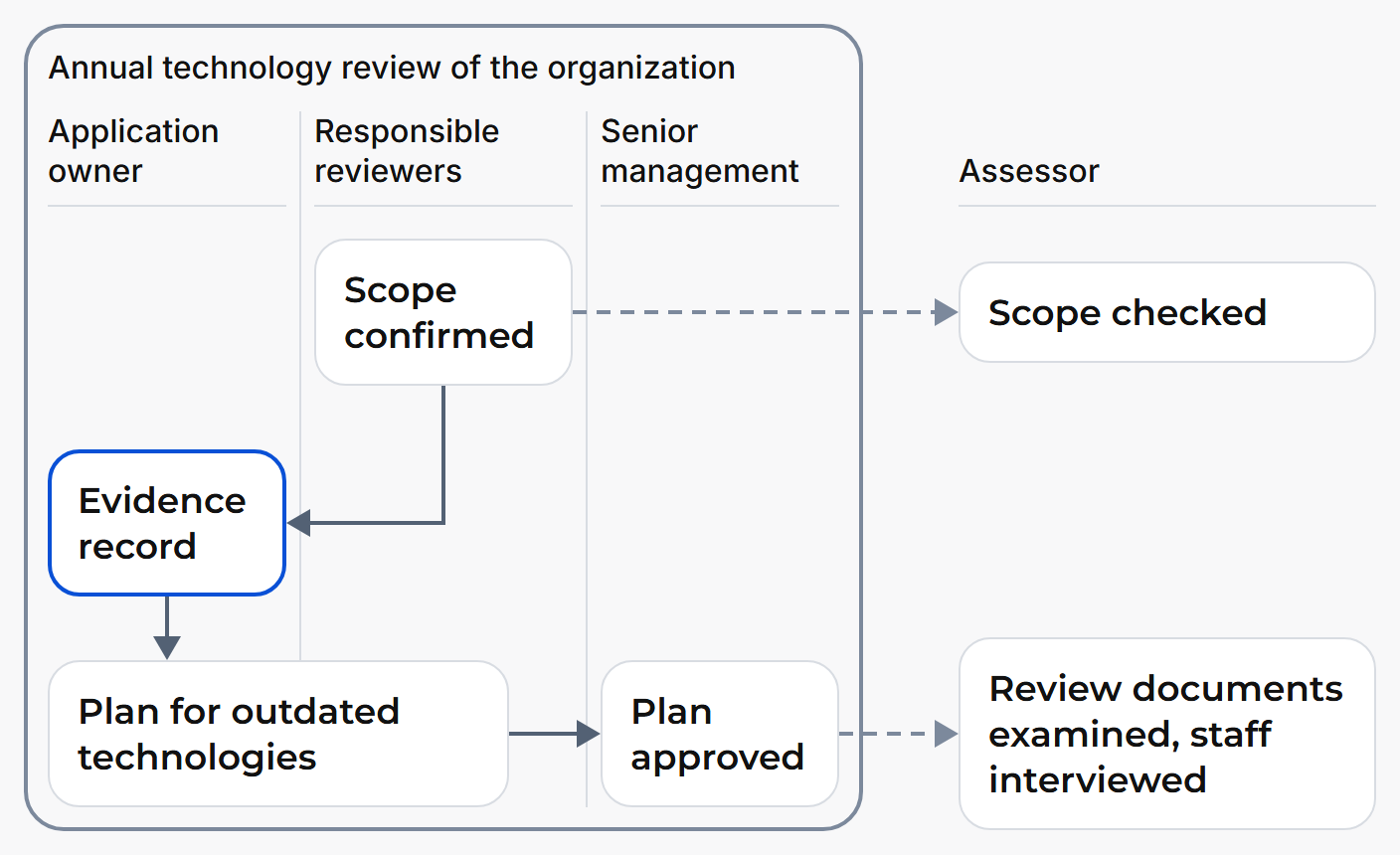
The frame, the annual technology review of the organization, holds three lanes: application owner, responsible reviewers and senior management. Scope confirmed leads to the evidence record, which feeds the plan for outdated technologies across two lanes; that plan leads to plan approved. The assessor lane stays outside the frame with two dashed checks: scope checked after scope confirmed, and review documents examined, staff interviewed after plan approved. The split of work between the application owner and the responsible reviewers is a working arrangement; the standard names senior management and the assessor.
Separate a decision from completed implementation
A plan entry names:
- the owner of the change;
- the steps;
- the check that will confirm the change;
- the approval by senior management and its date.
A completed change can be reproduced on the system: the new dependency tree, the build artifact and the tests that pass on it.
Record the evidence, owner and remaining uncertainty
A reviewer sees at once which entries are checked, which rest on a vendor statement and which are not checked yet, and who owns each open item. An open item stays open, with its owner named, until the check is done.
Prepare the component evidence for the responsible review
A completed evidence record shows the smallest decision still open: a missing check, a vendor question or a proposal for the plan. When an insurer's renewal questionnaire asks instead, the asker and form differ: prepare unsupported software evidence for the insurer. When the route for the whole application is unclear, review an application assessment first.
If one application is blocking a platform step, bring the component, version and workflow to discuss the next justified result.
Sources
- PCI SSC: PCI DSS v4.0.1 Requirements and Testing Procedures (June 2024)
- PCI SSC: Just Published: PCI DSS v4.0.1
- PCI SSC: FAQ 1473, role of accepting entities and assessors
- PCI SSC: PCI DSS v3.2.1 SAQ D for Merchants
- PCI SSC: PCI DSS v3.2.1 to v4.0 Summary of Changes, r1
- Red Hat: Backporting Security Fixes
- Apache Logging Services: Log4j 1.x
Frequently asked questions
What does PCI DSS 12.3.4 say in the applicable version?
In v4.0.1, the organization reviews its hardware and software technologies at least once every 12 months. The review checks vendor fixes and whether the technologies still support its PCI DSS obligations, documents end of life announcements and keeps a plan approved by senior management. In v3.2.1 the number named another item.
Does this requirement apply to every application in an insurance company?
No. Industry alone does not decide it. The requirements apply to the cardholder data environment and to components that could affect the security of card data. The organization confirms which components fall inside, and the assessor checks that scope during the assessment.
Which vendor support evidence should an application owner prepare?
For element 1, evidence that fixes reach the exact build: the patch source, bulletins naming that build and its origin. For element 3, the author's end of life announcement with link and reading date. For element 2, facts about what the component does.
Is upstream end of life the same as having no patch source?
Not necessarily. A distribution can apply fixes to an older version of a package, and extended support can cover some versions on the vendor's terms. For a library inside the application, the project's statement decides; the Log4j 1.x project states that the listed issues will stay unfixed.
Can extended support automatically establish compliance?
No. Extended support is a vendor offer whose terms are checked for your exact version. Where it covers that version, it can be the patch source for element 1. Scope, the other elements, plan approval and the assessment stay with the organization, senior management and the assessor.
Is a planned change the same as an implemented result?
No. Element 4 asks for a documented plan approved by senior management, and that plan records an intention. An implemented result can be reproduced on the system: the new dependency tree, the build artifact and passing tests. Record both separately with their status.
Who confirms scope and approves the review record?
The organization confirms scope at least once every 12 months and after significant changes, and the assessor checks it at each assessment. Senior management approves the plan. As a working arrangement, the responsible reviewers accept the evidence record into the technology review.
When might a bounded application change be relevant?
When support and the environment leave the component without a sufficient patch source and the change stays inside one application. We compare support, an environment change and a bounded code change first; any of them can be the right outcome. In the example, the change replaces one logging dependency.